
What is music therapy?
Music therapy is a creative form of therapy to support a range of psychological, developmental, physical, cognitive, social and communicative needs. It can be used with a diverse spectrum of people of all ages and abilities with no musical knowledge or experience required in order to benefit from it.
But what does that all really mean?
Despite having been around for just over 100 years, music therapy is still a hugely underutilised provision across the board, with many people not knowing what it really involves, how to access it, or who can benefit from it.
So, let’s start with the person facilitating the sessions, the music therapist.

A music therapist is a highly skilled musician who has undergone additional masters level training to qualify as a music therapist. As ‘music therapist’ is a legally protected title, this requires training courses to be approved by the Health and Care Professional Council. Only people who have graduated from approved training courses can practice as music therapists. Music therapists are also categorised as Allied Health Professionals, recognising the specific expertise and evidenced
based approaches they contribute to overall client care.
Music therapists are trained to work across a variety of settings, with a range of needs and ages. Some places you may find music therapy are:
∙ Neonatal units;
∙ Paediatric units and hospitals;
∙ Nurseries (mainstream & additional support needs);
∙ Primary and Secondary schools (mainstream, PMLD & additional needs);
∙ Mental health units (inpatient, community & forensic);
∙ Neurorehabilitation units (inpatient & community);
∙ Prisons;
∙ Community healthcare settings (such as nursing homes);
∙ Hospices.
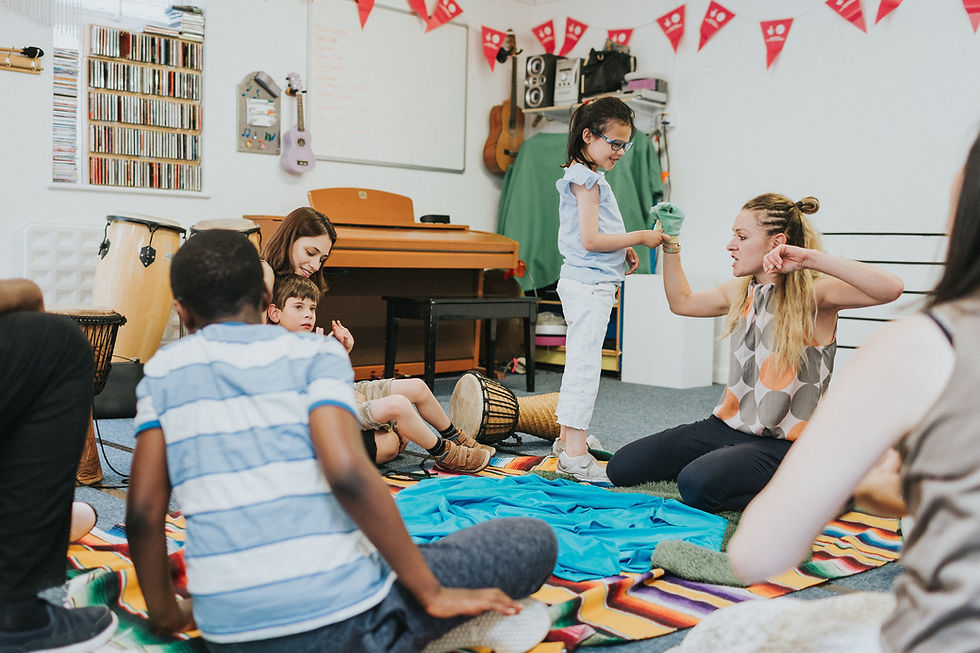
Amongst all these different settings you will find a huge range of needs, which is why music therapists are trained to be flexible, person centred, and holistic in their approach. A music therapist has an extensive toolkit of musical activities that they might draw on during sessions in order to tailor the course of therapy to individual needs and therapeutic aims. Sessions will most likely be grounded in musical activities but there will also be opportunities for talking and other creative mediums such as drawing and movement where appropriate.
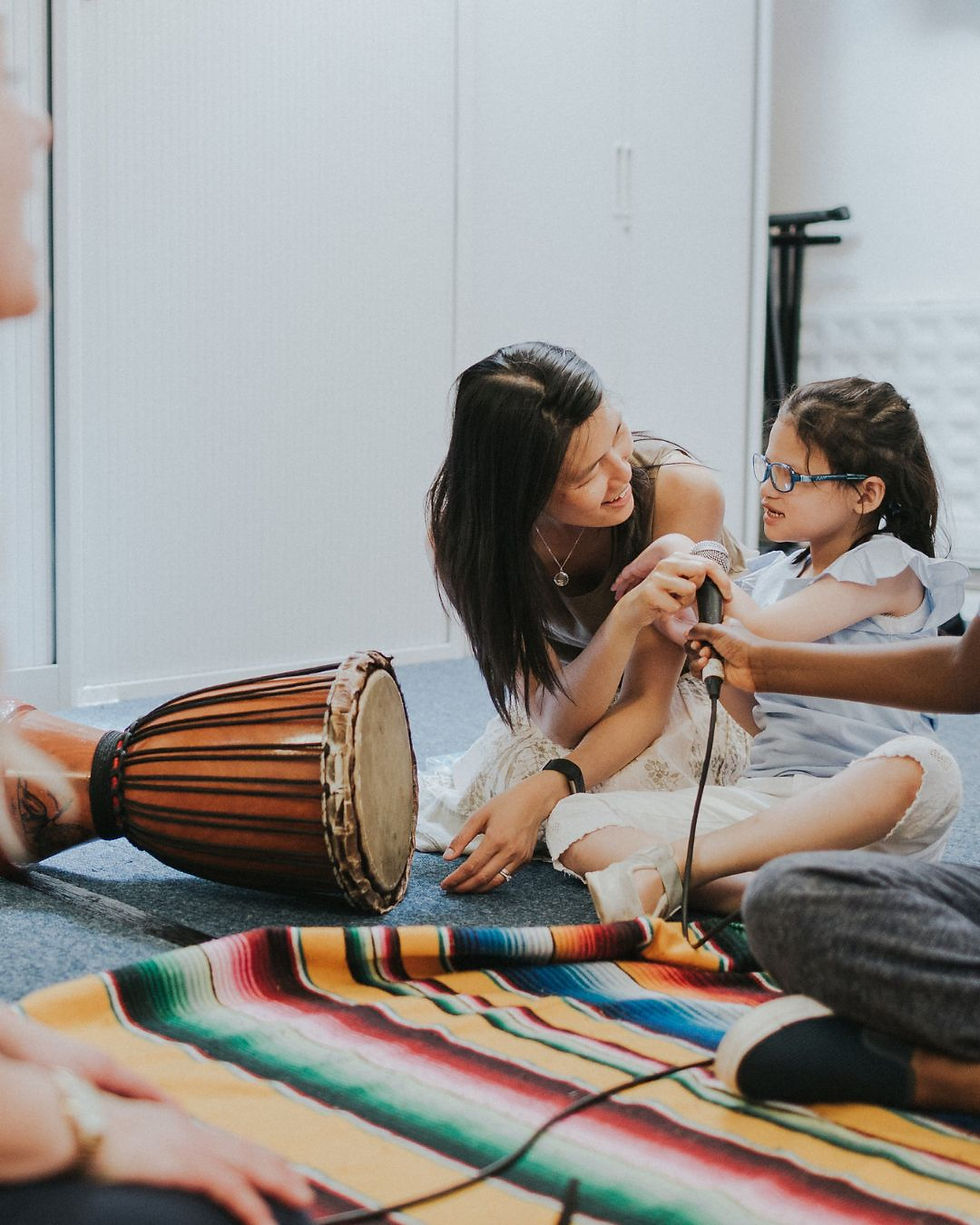
Although music therapists may orientate themselves around different therapeutic approaches (for example psychodynamic music therapy, or person-centred music therapy), most music therapists will draw on strands from various approaches with the therapeutic relationship at the centre of the sessions. This is the relationship between therapist and client, which is built mainly through live music making. Where appropriate or possible, verbal reflection may follow music making, where not, the music therapist uses their skill to create musical engagement through call and response, echoing, vocalisations etc in order to solidify a therapeutic relationship.
Music therapy has a strong and expanding evidence base for use with a wide variety of clients including those with social, emotional, mental health challenges, delayed speech/ communication skills, learning disabilities, and neurodiverse conditions. Sessions are then used to work towards specifically tailored goals which are agreed upon in advance with the clients/ their guardians. These may include goals such as:
To develop use of speech/ voice;
To recognise, name, and communicate emotions;
To develop self-regulation skills;
To foster emotional expression through creativity;
To explore sense of self and identity;
To increase attention span, focus, and memory;
To improve gross/ fine motor skills;
To develop relationship building skills by building a trusting and positive relationship with the therapist (or other members of the group in group therapy).
We hope that you now feel more confident in your knowledge of music therapy and how it can be used, and that this empowers you to continue your journey of exploring music therapy whether that be as a someone who would like the music therapy themselves, encouraging someone you know to seek support, or perhaps even inspiring you to train as a music therapist!

Music therapy is a fantastic, accessible and positive resource. We are proud to offer both group and 1-1 music therapy sessions here at our Shepherds Bush Site. If you would like to know more about our music therapy provision please contact our in house music therapist on the email below and they will be happy to offer advice, support, and further information.
References & Further Reading
Written evidence submitted by British Association for Music Therapy (September 2020): https://committees.parliament.uk/writtenevidence/10886/pdf/#:~:text=Neuroscience%2C%20for%20example%2C%20documents%20the,et%20al.%2C%202017
What is Music Therapy? British Association of Music Therapy: https://www.bamt.org/music-therapy/what-is-music-therapy
Music Therapy Conversations - Dr. Rachel Darnley-Smith (BAMT Podcast): https://www.bamt.org/DB/podcasts-2/dr-rachel-darnley-smith?ps=VnigpIz_NuIrC3owv-JfBWWLLJGNl3
® Martha Raban
Music House Education 2025

Comments