
How Can Music Therapy Support Secure Attachment?
Attachment styles and knowing what yours is has become somewhat of a craze over the last few years. There are endless online quizzes for people to determine their attachment style, to see if their relationships are “healthy” and “normal”. But in my experience, attachment is more nuanced than these websites and online questionnaires account for, and give the impression that people are just one type of attachment and that this then defines them for life, when really that couldn’t be further from the truth.

Attachment styles can vary within one person. You may have a secure relationship with your partner but
an anxious attachment with your parent, and attachment styles are capable of changing throughout your life. We may have started as avoidant but through self-awareness and reflection have transitioned to forming more secure relationships, and vice versa, we may start secure and then experience a traumatic event which makes us an anxious attached type. How we connect and bond with people constantly fluctuates depending on circumstances, our mood, our personal histories, and how we are experiencing that other person in the moment.
As I’m sure most people know there are four main types of attachment, with secure attachment being considered the healthiest. This means having the ability to form emotionally intimate relationships which fulfil and support us without withdrawing or becoming overly reliant on others. It balances the ability to engage meaningfully in relationships while still being able to maintain independence. The three remaining types of attachment are categorized in the following ways:
Anxious Attachment: A strong desire for connection and closeness combined with a fear of being rejected. These people tend to seek excessive amounts of reassurance.
Avoidant Attachment: A fear of connection and closeness so withdraws from relationships.
Disorganized Attachment: Struggles with trusting relationships, may display erratic behaviour such as being overly clingy and then suddenly distancing themselves.
While attachment styles can change and evolve throughout the life span, our first experience of being in a relationship has a huge influence over how we attach to other people later on in life. Our first relationship being that with the person who cared for us as a baby, also known as the primary caregiver. But how can music therapy support healthy attachment and who might it be helpful for?
Parent/Child Music Therapy

As an infant we might not understand the meaning of words, but babies learn to understand the meaning of vocal tones very early on. When speaking, most of us adapt and change our voice depending on who we are with, what we are trying to convey, and how we feel. This might mean speaking in a higher register, slowing down the speed at which we talk, speaking louder, speaking quieter, faster or emphasising certain words, and it’s almost instinctive when speaking to babies and toddlers to exaggerate these changes in order to make our voice playful and engaging.
Over time, infants associate types of voices with emotions, for example they might not understand the words you’re saying, but they know you’re speaking quickly and at a higher pitch than normal, so therefore something exciting might be about to happen! Parents and carers will be able to notice this back in their own child, identifying whether their child is excited or anxious or tired through the vocal sounds they make.
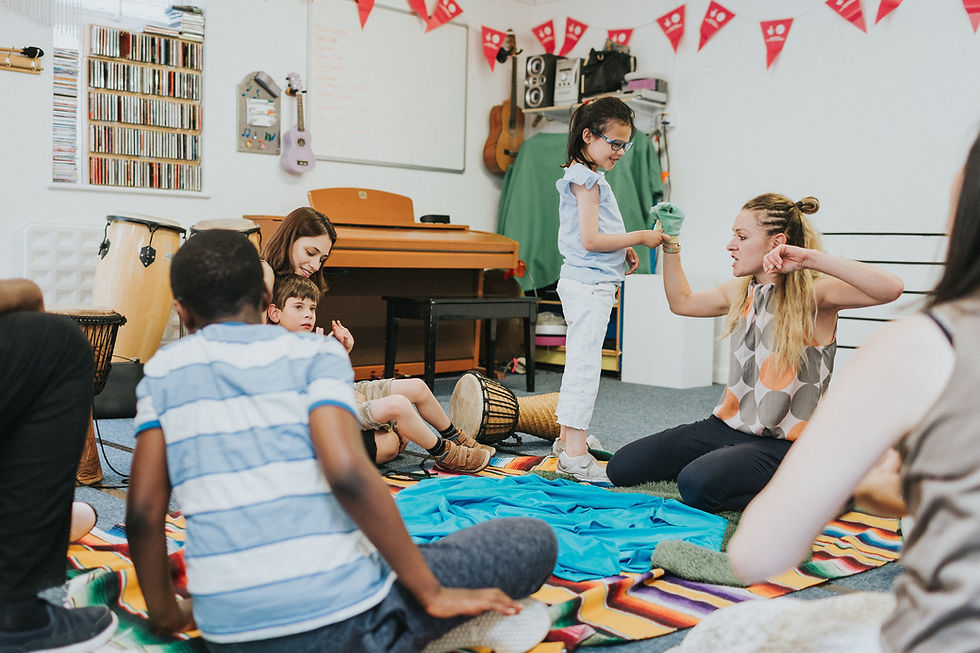
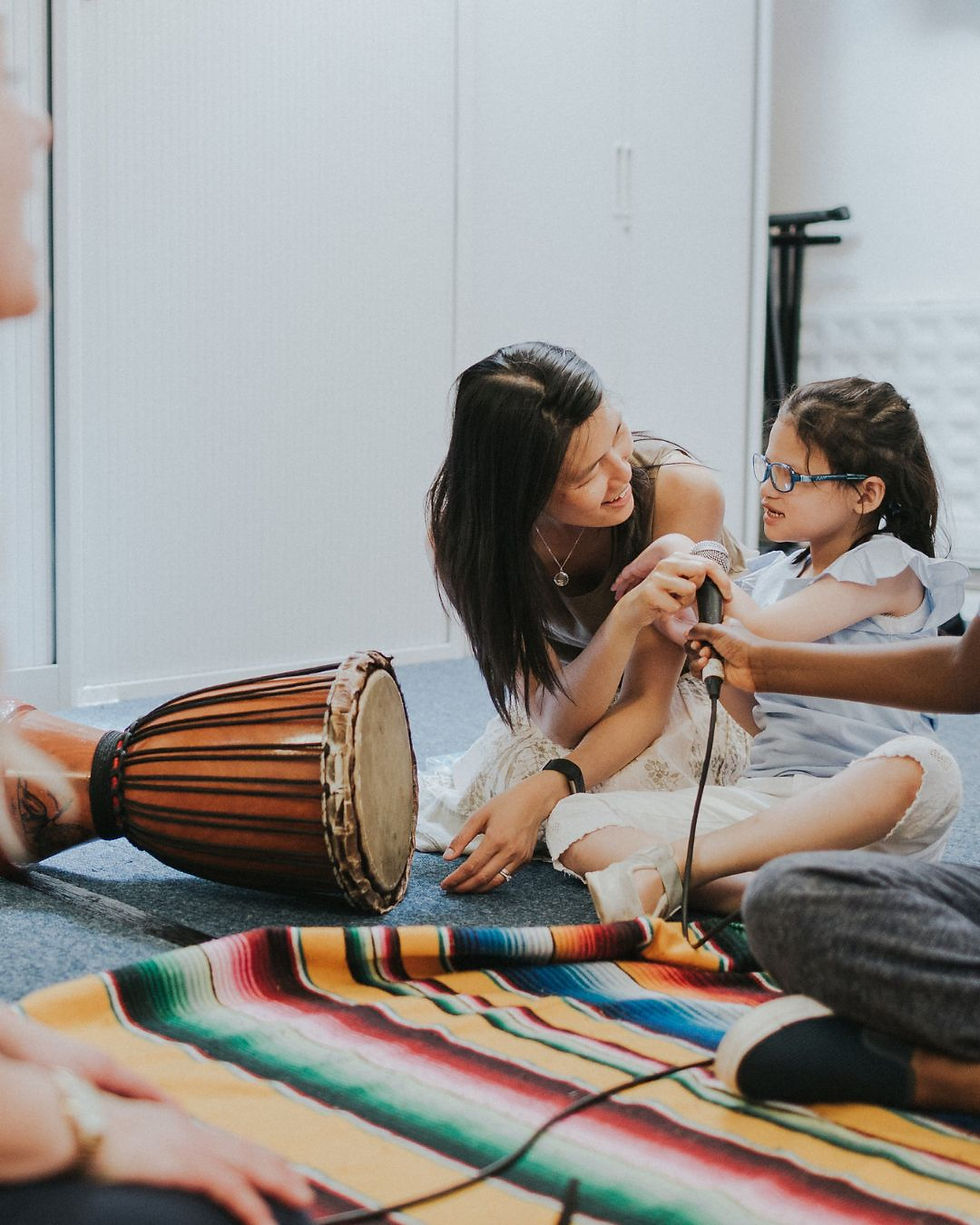
Parent/child music therapy taps into the natural musicality of the voice and allows you to extend it through instrumental play and supported vocal exploration. The music therapist can facilitate meaningful engagement between parent and child, supporting parents with how to respond to their child’s gestures and sounds, and encouraging children to be more creative and spontaneous in their play. The use of music in this context creates a level playing field of communication and allows parents/carers to attune and respond to their child in a different medium, making room for previously unexplored patterns of interaction that in turn give way to new emotions and a renewed sense of connection. A mutual sense of connection is vital for helping children and parents establish secure attachment patterns and go on to contribute to healthy and meaningful relationships later in life.
Music Therapy for Anxious, Avoidant, or Disorganized Attachment
Regardless of age, attachment styles can be changed, and if you find your attachment style is causing you distress then music therapy may be an appropriate therapeutic intervention to try and help. The therapeutic relationship (the relationship between client and therapist) is a central component to any type of therapy, and the formation of a successful therapeutic relationship can itself be profoundly healing for some people with attachment difficulties. Forming a relationship with a therapist takes trust, commitment, and honesty which may not be something that comes very easily to those with challenging attachment types. However, the therapeutic relationship can re-establish relationship expectations and norms, and be a helpful stepping stone in challenging misconceptions or assumptions you might have about relationships and how you are in them.
The non-verbal medium of music allows feelings, experiences, and challenges to be processed and thought about in a way that is less confrontational and more symbolic making it easier for some people to access. Patterns of relating can also be thought about within a musical context. Thinking about how client and therapist relate to each other musically in the session offers insight into how clients present in relationships outside the therapy room, allowing potential patterns to be spotted and thought about so clients have awareness and control about how they show up in relationships.
At Music House Education, we provide music therapy for families, parent/child duos, and individuals up to the age of 25 years old and are able to think about attachment and how it’s impacting your life and relationships. If you would like to know more, please contact our in-house music therapist on the email below and they will be happy to offer advice, support, and further information.
References and Further Reading
Music therapy and adoption – supporting attachment and healthy relationships. British Association of Music Therapy (available online as a PDF)
® Martha Raban
Music House Education 2025

Comments